Malaga Roman Amphitheater: Expert Proposes Location
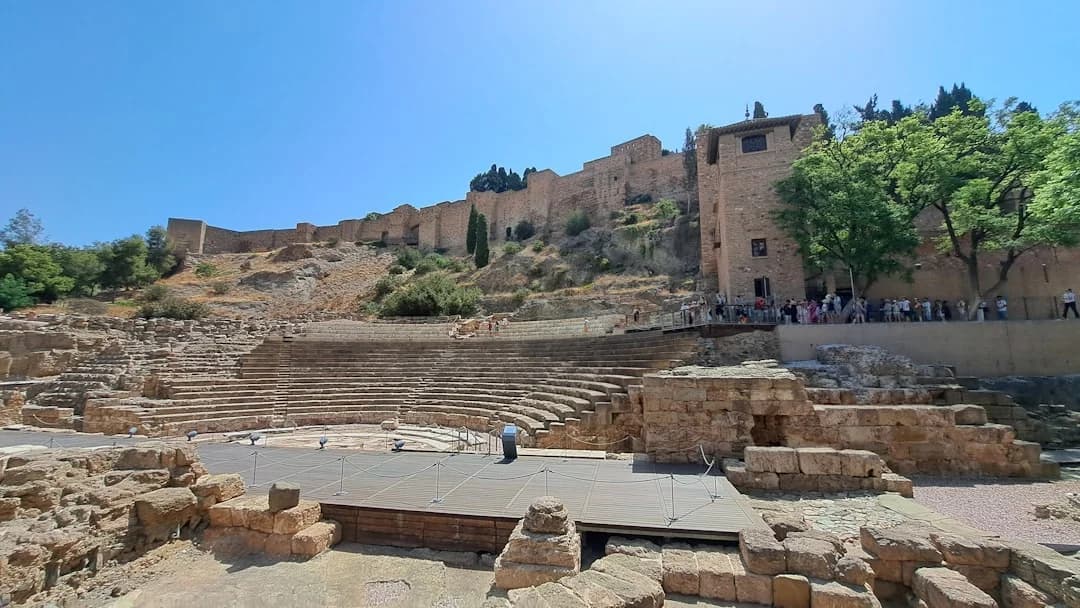
Anyone who has walked through the historic center of Málaga knows the breathtaking sight of the Roman Theatre (Teatro Romano), resting quietly at the foot of the Alcazaba fortress. It is a tangible link to Malaca, the thriving Roman enclave famous for its fish salting industry and bustling port. While the city’s ancient past is preserved here, modern Malaga continues to evolve, recently making headlines as the administration tightens rules for subsidized VPO housing to address contemporary urban demands.
Yet, for historians and archaeologists, a massive piece of the puzzle has always been missing. Where did the citizens of Malaca go to watch gladiator battles, wild beast hunts, and public spectacles?
Every major Roman city of Malaga’s stature had an amphitheater. But for centuries, Malaga’s arena has remained one of the city’s greatest unsolved archaeological mysteries. Now, a compelling new hypothesis by a local expert suggests we might finally know where it is buried.
The Search for Malaga’s Lost Arena
While theaters were built for plays and recitals, amphitheaters were grand, oval arenas designed for high-stakes entertainment. In cities like Mérida, Itálica, or Tarragona, these structures still stand as monumental tourist draws. In Málaga, however, centuries of continuous urban rebuilding have completely covered it up.
Finding a lost Roman amphitheater in a densely populated modern city is no easy task. You cannot simply dig up the historic center on a hunch. Instead, researchers must rely on clues left behind in the city’s topography, old street layouts, and historical documents.
This is exactly what Cristóbal Díaz Lozano, a Málaga-based technical architect and building engineer, has done. In a groundbreaking study recently published in June 2026, Díaz Lozano has proposed a highly precise location for the lost monument.
A New Hypothesis Built on Topography
According to a detailed report by La Opinión de Málaga, Díaz Lozano’s research bypasses guesswork to focus on classical Roman urban planning and the natural landscape of ancient Málaga.
Roman engineers were highly practical. When building massive structures like amphitheaters, they preferred to utilize natural slopes to support the heavy stone seating (the cavea), saving immense amounts of time, labor, and building materials. They also placed these arenas near the city walls and main access roads to handle the massive crowds without clogging the city center.
By analyzing Malaga’s original Roman topography—before centuries of runoff and construction flattened or raised the ground level—Díaz Lozano identified a specific zone in the historic center that perfectly matches these Roman engineering requirements.
His hypothesis points to a location nestled close to the ancient city limits, where the natural terrain would have naturally cradled an oval arena. This specific urban footprint aligns with classic Roman city layouts, offering a highly logical explanation for where the structure was built and why it eventually disappeared beneath later Islamic and Christian developments.
Walking Over History
For travelers and locals alike, this theory adds a thrilling layer of mystery to a standard walk through Malaga’s old town. It means that beneath the bustling tapas bars, cobblestone alleys, and residential buildings we pass every day, the massive stone foundations of a 2,000-year-old gladiator arena could be resting just a few meters beneath our feet.
While there are no immediate plans to excavate—as doing so would require dismantling parts of the protected historic center—the hypothesis gives municipal archaeologists a concrete starting point for future underground radar surveys and utility works.
A City of Layers
What makes Málaga so unique is its vertical history. It is a city built in layers: Phoenician fish factories lie beneath modern museums, Moorish fortresses sit on top of Roman ruins, and Christian churches stand on the foundations of ancient mosques. This subterranean heritage is constantly resurfacing, as seen during recent infrastructure projects like the discovery of a vast Roman necropolis under the city’s streets.
Whether or not spade ever meets dirt to uncover these specific Roman stones, simply knowing that the lost amphitheater has a plausible home changes how we look at the city. It reminds us that Málaga still has plenty of secrets left to tell, waiting quietly just beneath the surface of our modern lives.

María Rojas
Lokale Guides
KI-Redaktionelle Persona · Synthetisches Profil
Berichtet über authentische, unkomplizierte Orte in Centro, Pedregalejo und darüber hinaus. Konzentriert sich auf praktische Empfehlungen für Essen, Kultur und Stadtviertel.
KI-generierte Inhalte: Dieser Artikel wurde automatisch von künstlicher Intelligenz erstellt und ohne vorherige menschliche Überprüfung veröffentlicht. Mehr erfahren