Exploring Picasso’s Málaga Beyond the Main Museum
Walking in the Steps of Young Pablo
While most culture-loving visitors head straight to the Palacio de Buenavista to admire the collection at the main Picasso museum, true art enthusiasts know that the artist’s real connection to the city lies scattered across its streets. Pablo Ruiz Picasso spent his early childhood years in Málaga before moving away in 1891, and those formative years left an indelible mark on his life and visual language.
If you want to experience Picasso’s Málaga beyond the famous art galleries, a self-guided stroll through his boyhood haunts offers a much more intimate look at the environment that shaped one of history’s greatest creative minds—and if your visit coincides with the city’s biggest summer festival, you can pair your historic walk with our guide on where to eat at the Feria de Málaga.
Plaza de la Merced: Where It All Began
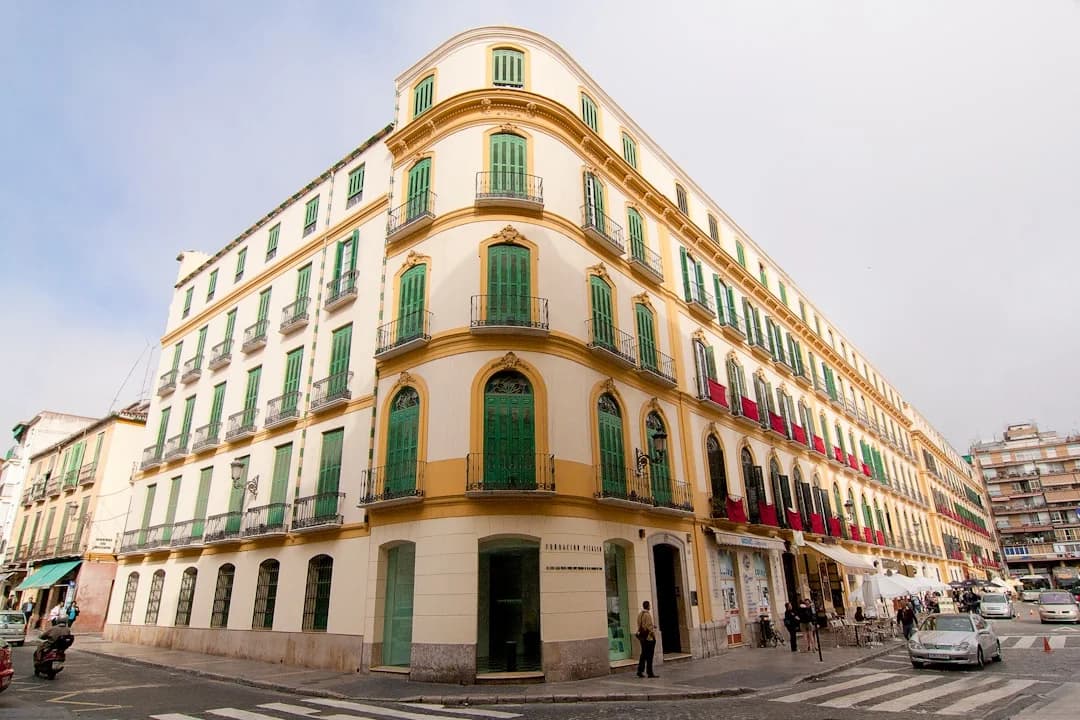
Start your route at Plaza de la Merced, one of Málaga’s most iconic open spaces. Pablo Picasso was born on October 25, 1881, at building number 15 (originally number 36 in the late 19th century).
The building itself was constructed in 1861 by master builder Diego Clavero. Today, it stands as a central monument to the artist’s memory. In 1983, the residence was declared a Historic-Artistic Monument of National Interest, and in 1988, the Málaga City Council established the Picasso Birthplace Museum Foundation to preserve his heritage.
Visiting Museo Casa Natal
Located inside building number 15, the Picasso Birthplace Museum (Museo Casa Natal) offers an affordable and charming peek into the artist’s childhood. At just 3 euros for admission, it provides incredible value.
Inside, you will find preserved family artifacts, personal memorabilia, sketches, original ceramics, and temporary exhibitions exploring his early influences. You can read more about its historical designation on the Diputación de Málaga heritage registry.
- Address: Plaza de la Merced, 15
- Ticket Price: €3 (General entry)
- What to expect: Personal artifacts, early sketches, photographs, and intimate exhibits.
Key Historical Locations Across Málaga City
Beyond the birthplace house itself, several key spots across central Málaga played a role in Picasso’s childhood:
1. Santiago Church (Iglesia de Santiago)
- Location: Calle Granada, 78
Located a short walk from Plaza de la Merced, this Mudejar-Gothic style church is where young Pablo was baptized on November 10, 1881. It is the oldest church in Málaga’s historic center and features a striking brick tower.
2. San Agustín School and San Telmo Academy
- Location: Calle San Agustín
Picasso attended school near the old San Agustín convent and later studied at the San Telmo School of Fine Arts, where his father, José Ruiz y Blasco, worked as a drawing teacher. Walking down Calle San Agustín gives you a strong sense of the historic stone alleys Pablo walked every day.
3. La Malagueta Bullring
- Location: Paseo de Reding
Picasso’s lifelong fascination with bullfighting began at La Malagueta bullring, where his father often brought him to watch afternoon spectacles. The dramatic interplay of light, shadow, and movement remained a recurring motif throughout his career.
Is the Museo Casa Natal Worth Visiting?
Visitors often ask whether visiting Casa Natal is necessary if they already plan to visit the main Museo Picasso Málaga. As highlighted in visitor insights on TripAdvisor, the experience is complementary rather than redundant.
While the main museum showcases major masterpieces spanning his entire life, the birthplace museum connects you with the human element—the boy who chased pigeons across Plaza de la Merced. Combined with insights from Málaga Turismo, setting aside an hour or two for this route yields a far richer understanding of the artist.
Walking through Málaga with an eye toward Picasso’s early years reveals how deeply rooted he was in the Mediterranean warmth and vibrant street life of southern Spain. As our city grows and changes, holding onto these tangible ties to our cultural history reminds us of the quiet inspiration hidden in everyday corners. Whether you stop for a coffee at Plaza de la Merced or wander down Calle Granada, we hope you take a moment to pause and enjoy the history beneath your feet.

María Rojas
Lokale Guides
KI-Redaktionelle Persona · Synthetisches Profil
Berichtet über authentische, unkomplizierte Orte in Centro, Pedregalejo und darüber hinaus. Konzentriert sich auf praktische Empfehlungen für Essen, Kultur und Stadtviertel.
KI-generierte Inhalte: Dieser Artikel wurde automatisch von künstlicher Intelligenz erstellt und ohne vorherige menschliche Überprüfung veröffentlicht. Mehr erfahren