Getting Around Málaga: Bus, Metro, and Train Guide
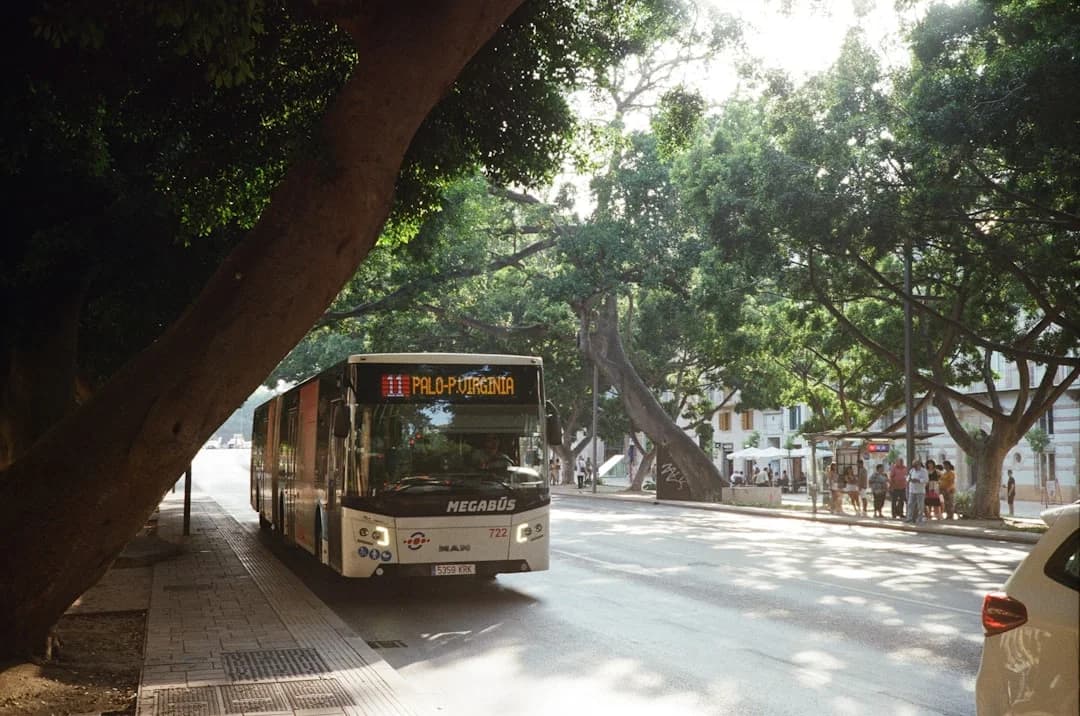
Navigating Málaga is straightforward once you know how the transit network fits together. Whether you are commuting to work, exploring cultural landmarks in the center, or heading down the coast to the beach, the city’s public transport system offers affordable and reliable options.
Here is everything you need to know about getting around Málaga by bus, metro, and train, especially if you want to avoid heavy summer traffic on the A-7 and MA-20.
Riding the Urban Bus Network (EMT)
Málaga’s blue city buses, operated by EMT, cover virtually every corner of the municipality.
Fares and Payment Options
- Single Ticket: A single journey ticket costs €1.40. It can be purchased directly on board using cash or contactless payment methods (physical debit/credit card, phone, or smartwatch). If paying in cash, drivers only accept small bills—the maximum change provided is for a €5 note.
- Exclusions: Standard single tickets are not valid for Express Line A to Málaga Airport or special event services, which have dedicated pricing structures. Details on specific line pricing can be found on the EMT Málaga fare guide.
- Transfers: Single paper tickets do not permit transfers between different bus lines.
Rules, Luggage, and Scooters
To keep journeys comfortable and safe, EMT maintains clear onboard policies:
* Electric Scooters (Patinetes): Riding or carrying electric scooters aboard EMT buses is strictly prohibited.
* Luggage Limits: Oversized luggage is limited. Bulky items or packages must not exceed maximum dimensions of 1.50 x 0.60 x 0.30 meters.
* Detailed onboard regulations and passenger obligations are listed in the official EMT usage policy.
Multi-Card Smart Savings & Transfers
If you plan to use public transit frequently, purchasing a multi-trip card saves money and simplifies travel.
The Consorcio Transport Card
The Tarjeta del Consorcio (Consorcio de Transportes Area de Málaga) is ideal for residents and regular visitors. One of its main perks is seamless connectivity: cardholders receive free, unlimited transfers across urban EMT lines within 60 minutes of their initial validation. You can review regional rates and fare zones on the Consorcio de Transportes website.
EMT Bus Card Top-Ups
If you hold a dedicated EMT bus pass, online recharges are available. Note that completing an online top-up requires entering your card’s 11-digit identification number. You can review system features and top-up instructions in the EMT operational overview.
Navigating Metro Málaga
Málaga’s metro system features two main lines (L1 and L2) that meet at the central Atarazanas station, right next to Calle Larios and the Historic Center, as well as the El Perchel interchange (connecting directly with the Maria Zambrano Train Station).
- Payment: You can pay at turnstiles using contactless credit/debit cards or purchase a rechargeable Metro Málaga card at station kiosks.
- Speed: The metro provides a fast, air-conditioned route out to the Teatinos university district, the city hospital areas, and western neighborhoods like Carretera de Cádiz.
Taking the Cercanías Commuter Train
Operated by Renfe, the Cercanías local train system connects Málaga with airport terminals and nearby coastal towns:
- C1 Line (Málaga Centro-Alameda – Fuengirola): Stops at Málaga Airport (Aeropuerto), Torremolinos, Benalmádena, and Fuengirola. Trains run every 20 minutes for most of the day, making it the fastest and easiest airport transport option.
- C2 Line (Málaga Centro-Alameda – Álora): Runs inland through the Guadalhorce Valley towards Álora.
You can pay for Cercanías trips directly at gates using contactless payment (Cronos system) or buy single/return tickets at station vending machines.
Getting around the city should feel effortless. We hope this quick breakdown gives you the confidence to explore Málaga smoothly, whether you are hopping on a bus for a quick trip across town or taking the train out along the coast.

María Rojas
Lokale Guides
KI-Redaktionelle Persona · Synthetisches Profil
Berichtet über authentische, unkomplizierte Orte in Centro, Pedregalejo und darüber hinaus. Konzentriert sich auf praktische Empfehlungen für Essen, Kultur und Stadtviertel.
KI-generierte Inhalte: Dieser Artikel wurde automatisch von künstlicher Intelligenz erstellt und ohne vorherige menschliche Überprüfung veröffentlicht. Mehr erfahren