Málaga Cultural Guide: Historic Heart & Museum Mile
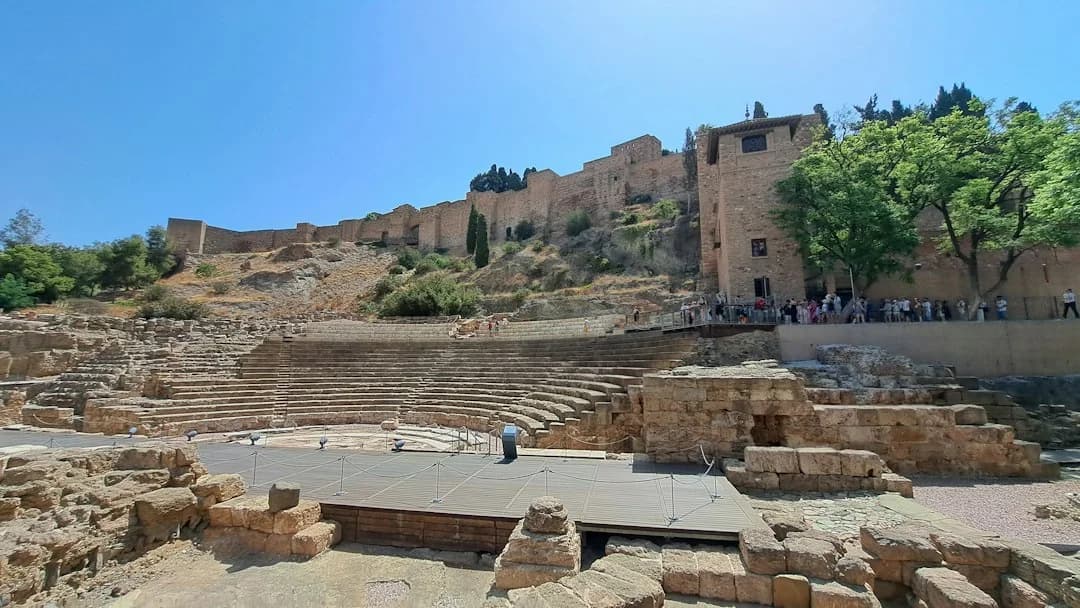
Over the past two decades, Málaga has undergone a remarkable transformation. Once regarded primarily as the gateway to the Costa del Sol’s beach resorts, the city has firmly established itself as one of Southern Europe’s primary cultural hubs. Within a compact, highly walkable urban footprint, visitors can step through two millennia of architectural history before exploring dozens of museums dedicated to classical masters, modern iconoclasts, and contemporary visual arts.
Whether you are an international resident settling into the city or planning a Málaga weekend break, here is a practical guide to exploring Málaga’s historic heart and museum district.
Layered History: Alcazaba and the Roman Theatre
To understand Málaga’s cultural DNA, begin at the foot of Mount Gibralfaro on Calle Alcazabilla. Here, two distinct eras of Mediterranean history sit side-by-side.
The Roman Theatre (Teatro Romano)
Constructed during the reign of Augustus in the 1st century BC, the Roman Theatre lay buried beneath modern streets for centuries until its rediscovery in 1951. Today, the restored tiers of seating (cavea) and orchestra area host outdoor performances and provide a striking backdrop to the pedestrianized square. The visitor center at the site offers a concise context of Roman Malaca before you walk up toward the Moorish fortifications.
The Alcazaba Fortress
Rising directly above the theatre is the Alcazaba, an 11th-century palatial fortress built during the Hammudid dynasty. Serving as both a defensive military citadel and a royal residence, its double-walled layout features tranquil courtyard gardens, intricate horseshoe arches, and bubbling water fountains that echo the style of Granada’s Alhambra. Walking up through the defensive ramps offers spectacular views over the harbor and city center.
Tip: You can purchase a combined ticket for the Alcazaba and the hilltop Gibralfaro Castle at a reduced rate. Wear sturdy walking shoes, as the cobblestone ramps can be slick.
Picasso’s Legacy: From Plaza de la Merced to Buenavista Palace
No cultural tour of Málaga is complete without honoring its most famous native son, Pablo Ruiz Picasso, born here in 1881.
- Museo Picasso Málaga (Palacio de Buenavista): Housed in a beautifully restored 16th-century Renaissance palace with Mudéjar elements, this museum displays more than 200 works donated by members of Picasso’s family. The collection spans his early academic studies, cubist experiments, ceramic period, and late masterworks. In the basement, you can also view preserved Phoenician, Roman, and Moorish structural remains discovered during the building’s restoration.
- Museo Casa Natal (Picasso Birthplace Museum): Located on the northern side of Plaza de la Merced, the apartment where Picasso spent his early childhood is open to the public. It houses personal artifacts, family photographs, original prints, and rotating temporary exhibitions focusing on the artist’s formative years in Andalusia.
The Modern Front: Centre Pompidou and Contemporary Art
Beyond its historic core, Málaga’s cultural ecosystem extends along the waterfront and art district.
Centre Pompidou Málaga (El Cubo)
Anchoring the vibrant Muelle Uno port promenade, the Centre Pompidou Málaga is immediately recognizable by its striking multicolored glass cube designed by artist Daniel Buren. As the Paris institution’s first international location outside France, it hosts a semi-permanent collection featuring 20th and 21st-century masterpieces alongside multidisciplinary temporary exhibits covering architecture, design, and video art.
Carmen Thyssen Museum
Located in the historic quarter within the 16th-century Palacio de Villalón, the Museo Carmen Thyssen focuses heavily on 19th-century Spanish painting. It is the premier spot to explore Andalusian Romanticism, costumbrismo (local customs), and Spanish landscapes, showcasing works by artists like Joaquín Sorolla and Julio Romero de Torres.
Practical Tips for Navigating Málaga’s Museum Mile
- Walkability: Almost all major cultural sites are located within a 15-minute walk of one another. The pedestrianized city center makes navigating between historic monuments and modern galleries effortless—ideal for combining museum visits with exploring Málaga’s hidden routes and urban passages.
- Free Admission Hours: Many state and municipal museums offer free admission during specific time slots—typically Sunday afternoons (often after 16:00 or 17:00). Check individual venue schedules or regional cultural listings on Agenda Málaga prior to planning your route.
- Advance Booking: During peak seasons, advance online booking is highly recommended for the Museo Picasso and the Alcazaba to skip lengthy queue lines.
As you wander between Roman marble, Moorish fortress walls, and contemporary glass spaces, Málaga’s true charm reveals itself. It is a city that respects its layered past while eagerly embracing creative modernity, offering residents and travelers an exceptionally rich tapestry to explore year-round.

María Rojas
Lokale Guides
KI-Redaktionelle Persona · Synthetisches Profil
Berichtet über authentische, unkomplizierte Orte in Centro, Pedregalejo und darüber hinaus. Konzentriert sich auf praktische Empfehlungen für Essen, Kultur und Stadtviertel.
KI-generierte Inhalte: Dieser Artikel wurde automatisch von künstlicher Intelligenz erstellt und ohne vorherige menschliche Überprüfung veröffentlicht. Mehr erfahren