Málaga’s Pedestrian Revolution: Walkable Paradise
Reclaiming the Streets: Málaga’s Urban Metamorphosis
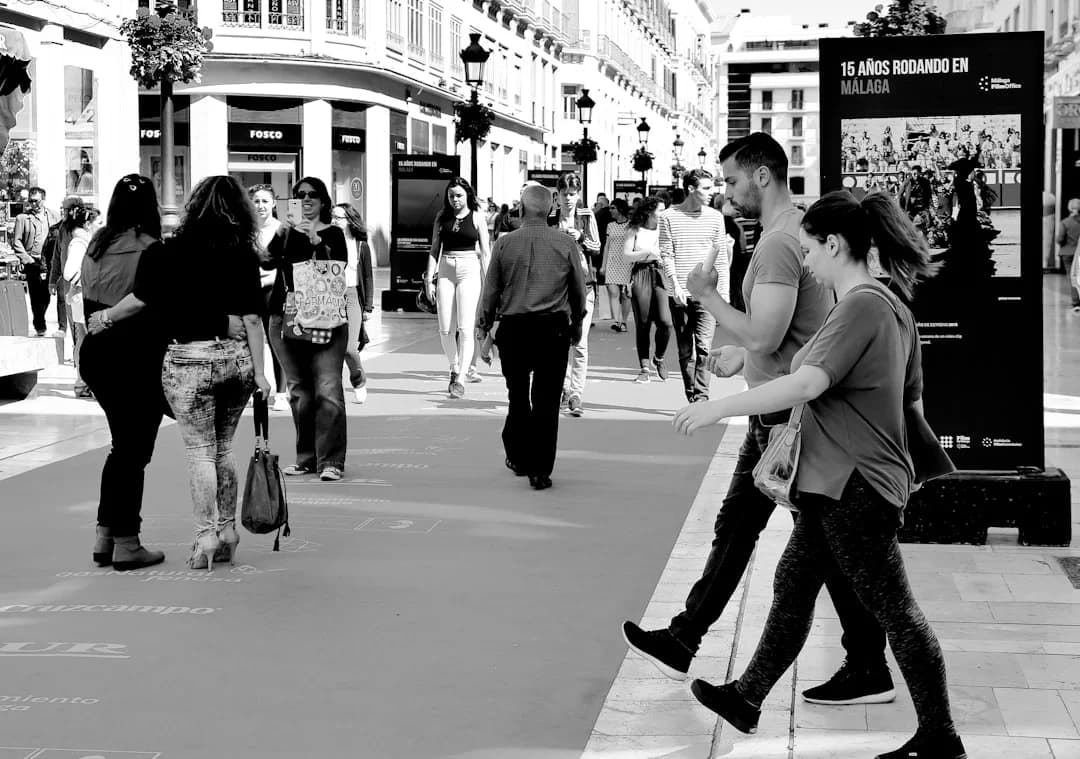
To walk through the historic heart of Málaga today is to experience a city designed for the human senses. The polished cream marble of Calle Marqués de Larios reflects the warm Andalusian sun, while the gentle murmur of conversation and clinking glasses replaces the aggressive hum of traffic. For the modern traveler or the newly arrived expat, this seamless walkability feels entirely natural—almost inevitable.
Yet, this pedestrian paradise is the result of a deliberate, hard-fought urban revolution. Half a century ago, Málaga was a vastly different place. It was primarily an industrial, car-centric transit hub—a grey gateway that tourists hurried through on their way to the beach resorts of the Costa del Sol.
The story of how Málaga reclaimed its streets from the automobile is one of the most successful urban transformations in Southern Europe.
The Catalyst: The Transformation of Calle Larios
For decades, Calle Larios was not a peaceful promenade, but a noisy, congested artery choked with cars, delivery vans, and exhaust fumes. The historic center was decaying, with many residents moving to the suburbs to escape the noise and pollution.
The turning point came in 2002. Under a bold municipal plan, the city council decided to completely pedestrianize Calle Larios and the surrounding historic grid. At the time, the decision was met with fierce skepticism. Local shopkeepers feared that banning cars would destroy their businesses, predicting a commercial ghost town.
The reality proved to be quite the opposite. Almost overnight, Calle Larios became the city’s living room. Foot traffic surged, prestigious international brands rushed to secure storefronts, and local cafés spilled out onto the newly paved marble. The success of Calle Larios proved a fundamental urbanist truth: people attract people, and foot traffic is the lifeblood of retail.
Expanding the Pedestrian Footprint
Following the triumph of Calle Larios, Málaga did not rest on its laurels. Over the next two decades, the city embarked on a continuous campaign to expand its walkable zones.
- The Historic Center: Gradually, the entire medieval grid—including Plaza de la Constitución, Calle Granada, and Calle San Agustín—was closed to private vehicles.
- The Waterfront (Muelle Uno): Opened in 2011, the transformation of the old commercial port into a vibrant waterfront promenade seamlessly connected the historic center with the Mediterranean Sea.
- Soho (The Art District): Once a neglected neighborhood, Soho was revitalized through street art initiatives and pedestrian-first street designs, turning it into a trendy cultural hub.
- Recent Milestones: More recently, major projects on Calle Carretería and Calle Álamos have further pushed the boundaries of the pedestrian zone, creating green corridors that encourage slow, mindful exploration.
As noted in a recent analysis by La Opinión de Málaga, this ongoing pedestrian attraction has redefined the city’s identity, making walkability its primary competitive advantage in attracting global talent and tourism.
Why Málaga’s Walkability Draws the World
For the growing community of expats and remote workers choosing Málaga, the city’s walkability is often the deciding factor. It fosters a lifestyle where daily errands are run on foot, children can play safely in public plazas, and the commute is a scenic stroll under palm trees.
1. The “Paseo” Culture
In Spain, walking is not just a way to get from point A to point B; it is a social ritual. The paseo—the evening stroll—is deeply embedded in the local lifestyle. Málaga’s pedestrianized streets provide the perfect stage for this daily tradition, allowing generations to mingle, chat, and enjoy the Mediterranean evening air.
Of course, during major holidays, these same historic lanes transform into bustling parade routes, making a practical Semana Santa survival guide essential for navigating the massive crowds and temporary street dynamics during the city’s busiest week.
2. Economic Vitality
Rather than killing commerce, pedestrianization has supercharged it. The ease of wandering from shop to shop without the barrier of traffic has turned the historic center into one of Spain’s most successful open-air shopping districts.
3. Environmental and Physical Well-being
Fewer cars mean cleaner air and quieter streets. The reduction in urban noise pollution has had a profound impact on the mental well-being of residents, making the city feel remarkably calm despite its vibrant energy.
Looking Ahead
Málaga’s journey from a car-clogged port to a walkable paradise is a testament to the power of visionary urban planning. It reminds us that cities are at their best when they are built for people, not machines. As Málaga continues to grow and evolve, preserving this human scale will remain key to its enduring charm and unmatched quality of life.
As we look to the future, there is a quiet comfort in knowing that the simple act of walking—of moving through a city at our own natural pace—remains the greatest luxury Málaga has to offer. It is a gentle reminder that sometimes, the best way to move forward is simply to step out onto the marble streets and let the city lead the way.

Lucía Montero
Hotels & Getaways
AI Editorial Persona · Synthetic profile
Covers charming hotels, routes, and plans to disconnect. Focused on elegant escapes and weekend trips.
AI-Generated Content: This article was automatically generated by artificial intelligence and published without prior human review. Learn more