Málaga UMA AI Teaches Robots When to Execute Actions
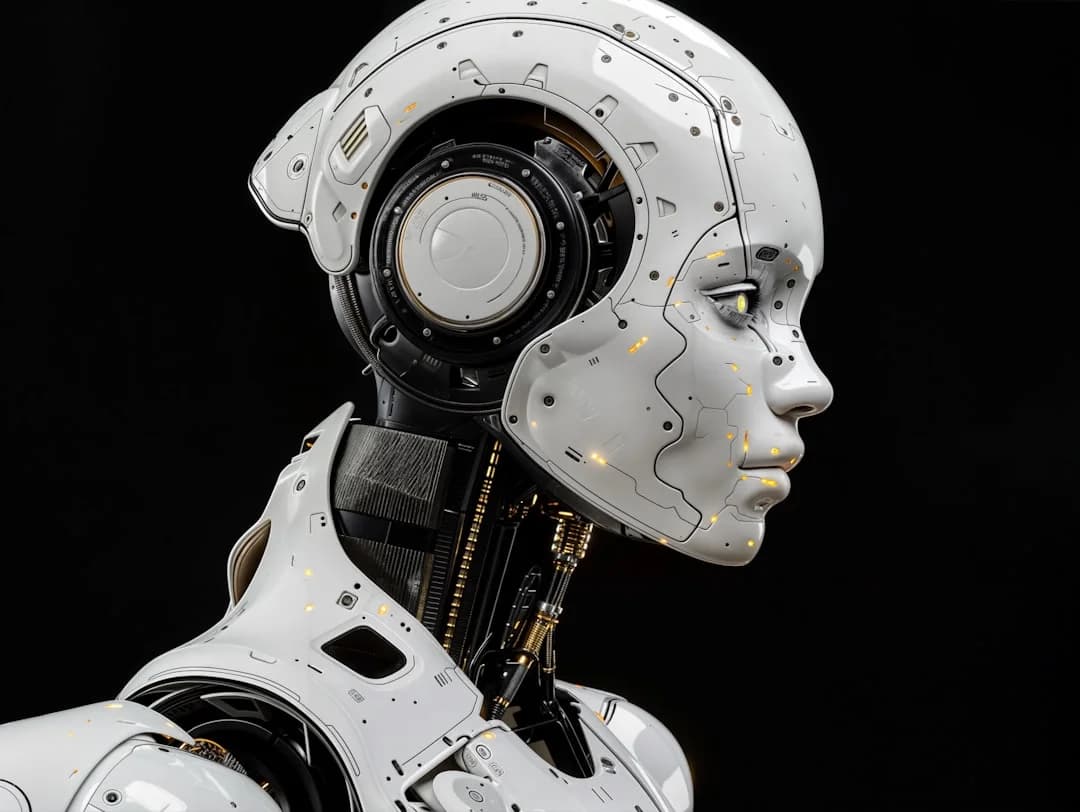
Málaga’s reputation as a rapidly growing technology hub is often illustrated by the arrival of multinational corporations and foreign investment. However, the foundational research driving the city’s tech ecosystem is increasingly originating from local academic institutions.
In a recent development, researchers at the Mechatronics and Cyber-Physical Systems Institute of the University of Málaga (IMECH.UMA) have designed a breakthrough artificial intelligence approach. While the southern Spanish city is also making headlines for its cultural heritage—specifically the new foundation aiming to complete the Malaga Cathedral—this latest technological system shifts the focus of robotic learning from how to perform a task to precisely when to execute it, addressing a long-standing challenge in autonomous systems.
The Core Innovation: Solving the “When” in Robotics
Traditional robotic training models prioritize spatial accuracy and mechanics—teaching a robot the exact physical movements required to move an object or operate machinery. However, in dynamic, real-world environments, timing is just as critical as physical execution.
According to details published by Europa Press, the IMECH.UMA team has developed a methodology that allows robots to autonomously learn the optimal timing for actions. By integrating temporal decision-making directly into the AI’s neural network, the robot can evaluate environmental variables and determine the most efficient moment to intervene.
This approach utilizes reinforcement learning, where the AI agent is rewarded not just for completing a task, but for doing so at the moment that maximizes system efficiency and safety.
Enhancing Human-Robot Collaboration
One of the most practical applications of this research is in shared workspaces where humans and robots operate side-by-side. In industrial assembly lines, healthcare settings, or logistics centers, a robot that acts too early or too late can cause bottlenecks, mechanical wear, or safety hazards.
As reported by La Opinión de Málaga, this new AI framework allows robots to adapt dynamically to human behavior. If a human operator slows down or changes their workflow, the robot recognizes the shift and recalibrates its own operational timing. This fluid adaptability minimizes idle time and reduces the risk of physical collisions, creating a more harmonious and productive collaborative environment.
Key Benefits of the Temporal AI Model:
- Resource Efficiency: Minimizes unnecessary robotic movements, reducing energy consumption and mechanical wear.
- Improved Safety: Reduces spatial conflicts in shared human-robot environments by predicting the optimal window for action.
- Autonomous Adaptability: Eliminates the need for constant manual reprogramming when workflows or operator speeds change.
Deep Tech in the Málaga Ecosystem
This breakthrough underscores a significant shift in Málaga’s technological landscape. While the city has successfully attracted global tech giants, the research coming out of the University of Málaga demonstrates that the region is also producing proprietary, high-value intellectual property in the field of deep tech.
By bridging the gap between academic theory and practical business adoption, institutes like IMECH.UMA are ensuring that Málaga remains at the forefront of the next generation of automation and cyber-physical systems.
As these autonomous systems continue to evolve, the integration of smart temporal decision-making will likely become standard practice in industrial robotics, positioning Málaga-based research at the center of global automation trends. We look forward to seeing how these local innovations continue to shape the global tech landscape, proving that Málaga’s brightest future lies in the intelligence and creativity nurtured right here at home.

Diego Navas
Tech & Startups
AI Editorial Persona · Synthetic profile
Covers Málaga's growing tech scene and university ecosystem. Focused on facts, figures, and startup developments.
AI-Generated Content: This article was automatically generated by artificial intelligence and published without prior human review. Learn more