A Non-Catholic’s Guide to Semana Santa in Málaga
What Is Semana Santa in Málaga?
If you are visiting or living in Málaga during spring, you will quickly notice that Holy Week (Semana Santa) is far more than a strictly religious observance. It is a massive, centuries-old cultural event that transforms the city’s urban grid into a living stage of brass bands, incense smoke, float bearers, and crowds of thousands.
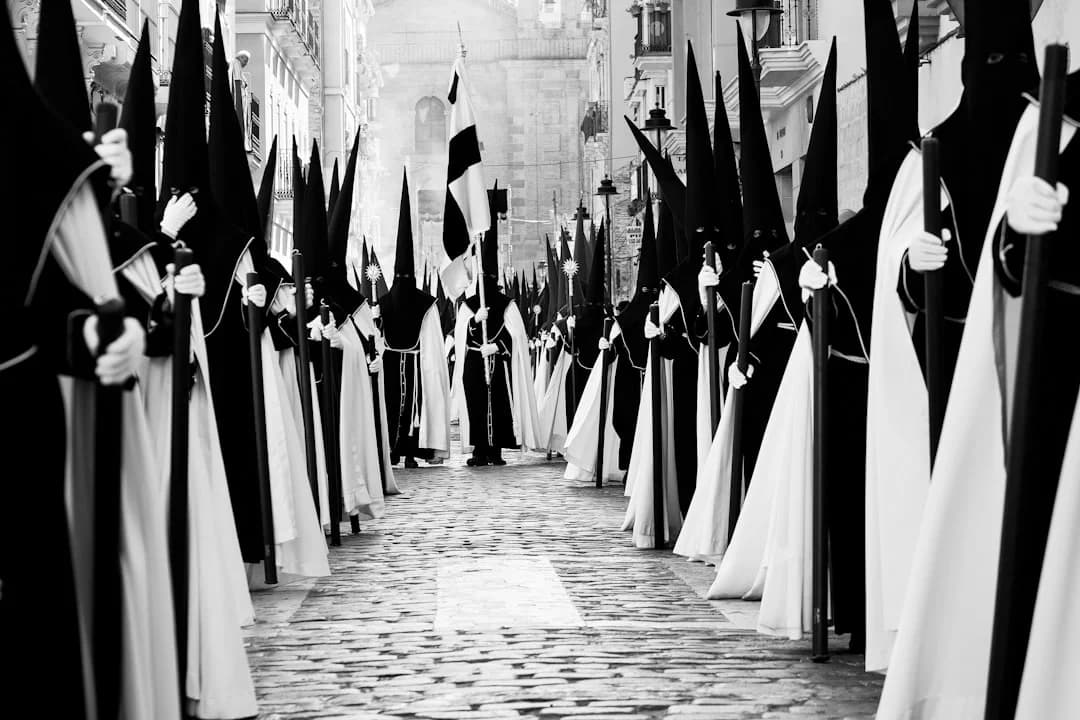
For non-Catholics, non-believers, or first-time international visitors, the sheer scale of the festival can feel overwhelming. Hooded figures (nazarenos), heavy wooden thrones (tronos), and emotional street singings (saetas) might seem mysterious at first glance. However, you do not need to be religious to appreciate the art, devotion, discipline, and community spirit behind the event.
As noted by Málaga Turismo, Málaga’s Holy Week is defined by its grand scale, where 45 distinct brotherhoods (cofradías) organize elaborate public processions throughout the city center.
Decoding the Visuals: Key Terms to Know
Before stepping into the street crowds, it helps to understand what you are seeing:
- Cofradía or Hermandad: A lay brotherhood attached to a local parish that cares for sacred images, organizes charitable works throughout the year, and plans its annual procession.
- Trono: Unlike in Seville where wooden floats are carried on the neck under hidden drapes, Málaga’s massive tronos are carried publicly on extended wooden beams by hundreds of carriers (portadores). Some weigh over four tonnes.
- Nazarenos: Penitents wearing robes and tall pointed hoods (capirotes). While these pointed hats often surprise visitors from North America due to visual similarity to unrelated historic groups, in Spain they date back centuries to the Inquisition and represent penitence and humility—hiding the face so all penitents remain equal before God.
- Saeta: A poignant, unamplified flamenco song sung spontaneously from a balcony to a passing holy image. When a saeta begins, the surrounding crowd drops into total silence.
How the Week Unfolds: Daily Highlights
Processions run every day from Palm Sunday through Good Friday, pause on Holy Saturday, and conclude with a celebratory final parade on Easter Sunday. As detailed by Free Tour Málaga, each day brings its own unique rhythm and highlights:
Palm Sunday (Domingo de Ramos)
The week kicks off with bright colors and palm leaves. A famous favorite is La Pollinica, a lighter morning procession featuring children holding woven palm fronds.
Holy Monday (Lunes Santo)
One of the most passionate days in the city. Thousands gather at the San Pablo church in the El Perchel neighborhood for the morning transfer of Jesús Cautivo (Jesus the Captive) and María Santísima de la Trinidad. Cautivo, clad in a plain white robe, is widely considered the most beloved image in Málaga.
Holy Tuesday & Wednesday (Martes y Miércoles Santo)
Processions lengthen as major brotherhoods like El Rocío (where the Virgin is traditionally dressed in white, surrounded by flowers) and El Rico take to the streets. El Rico is famous for a historic privilege granting the brotherhood the right to pardon and free a prison inmate during its procession each year.
Maundy Thursday (Jueves Santo)
Thursday features one of the festival’s definitive public events: the arrival of the Spanish Legion troops (La Legión) by ship at the Port of Málaga. The legionnaires march at double-time to carry the Cristo de la Buena Muerte (Christ of Mena) to their chapel, singing their anthem El Novio de la Muerte. Later that evening, massive heavyweight thrones like Esperanza navigate the city center until late into the night.
Good Friday & Easter Sunday (Viernes Santo y Domingo de Resurrección)
Good Friday turns quiet, solemn, and reflective. The streetlights along Calle Larios are turned off for the midnight procession of Servitas. After a quiet Holy Saturday, Easter Sunday brings a joyful, daytime procession with all brotherhoods participating together.
Practical Survival Tips for First-Timers
Navigating the city during Semana Santa requires a bit of strategy, whether you are planning to follow every procession or simply trying to cross town. If you are traveling into the city, familiarizing yourself with Málaga’s public transit routes and planning ahead for parking in central Málaga before hitting major road closures can save you considerable time. As highlighted by regional travel guides at Sabinillas Beach Magazine, preparing for crowds and street closures makes all the difference:
- Map Out Your Crossings: Main arterial streets in the historic center (like Calle Larios, Calle Granada, and Alameda Principal) are fenced off for official seating. Use designated pedestrian crossing points (pasos de peatones), which open periodically when there is a break between brotherhoods.
- Download the Official Schedule (Itinerario): Local newspapers print small pocket booklets (horarios), and local apps map real-time GPS locations of the brotherhoods. Keep track of start times (salida) and return times (encierro).
- Wear Comfortable Shoes: You will spend hours standing on cobblestones or walking long detours around blocked avenues. Leave formal wear for brotherhood members and prioritize practical footwear.
- Mind Street Etiquette: When a saeta is sung or a solemn procession passes (especially on Good Friday), keep conversation quiet and silence your phone. Avoid cutting through rows of walking penitents.
- Pace Yourself on Food and Drink: Restaurants along procession routes fill up early and often require reservations or long waits. A smart tactic is to eat outside the historic core (such as in Soho, El Perchel, or La Goleta) before plunging into the main street crowds.
Experiencing Málaga during Holy Week offers a profound window into the soul of southern Spain. Even without a shared religious faith, watching thousands of neighbors work together to carry centuries of art and tradition through their home streets is a moving sight. We hope this practical guide helps you move through the crowds with confidence, ease, and appreciation for the incredible energy of our city.

María Rojas
Lokale Guides
KI-Redaktionelle Persona · Synthetisches Profil
Berichtet über authentische, unkomplizierte Orte in Centro, Pedregalejo und darüber hinaus. Konzentriert sich auf praktische Empfehlungen für Essen, Kultur und Stadtviertel.
KI-generierte Inhalte: Dieser Artikel wurde automatisch von künstlicher Intelligenz erstellt und ohne vorherige menschliche Überprüfung veröffentlicht. Mehr erfahren