UMA Researchers Create Algorithm to Extend EV Range
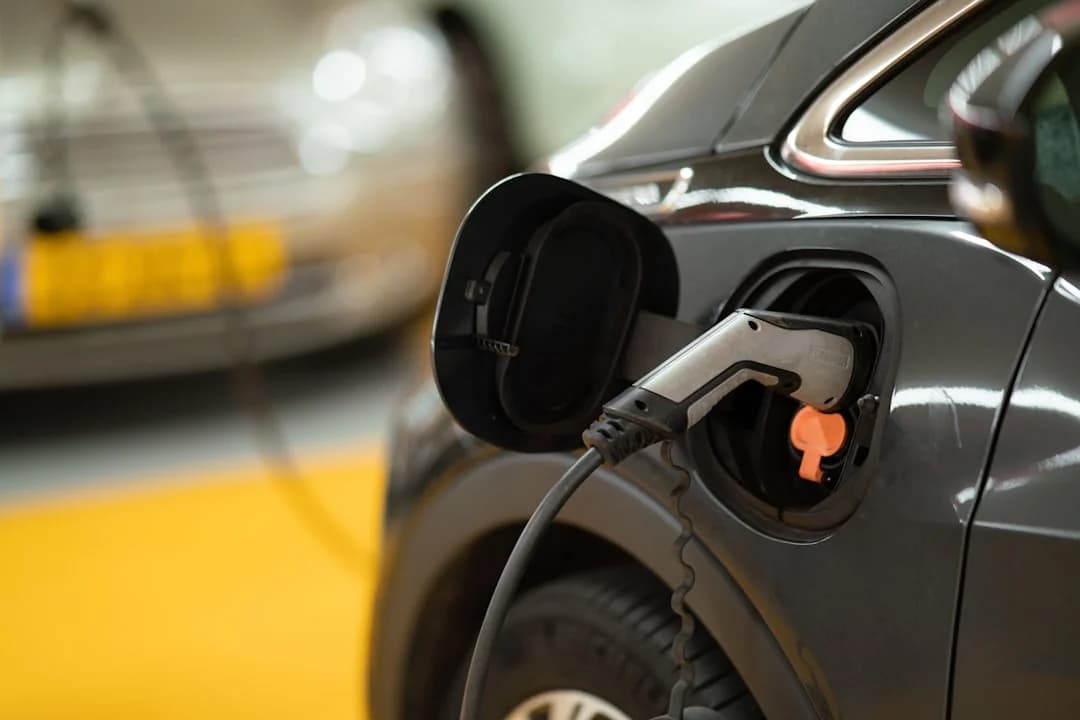
Engineering teams at the University of Málaga (UMA)—located in a growing tech hub that attracts international talent evaluating the cost of living in Málaga for expats—have introduced a mathematical optimization control algorithm designed to enhance energy efficiency in electric vehicles (EVs). Rather than relying on increased battery chemistry density or heavier physical packs, the research focuses on minimizing internal power losses within multiphase electrical drive systems.
Reported in energy and automotive research publications, including Ecoticias, this advancement targets a fundamental bottleneck in modern electromobility: thermal and switching inefficiencies in power electronics during variable-speed drive cycles.
Optimizing Multiphase Motor Efficiency
Standard commercial electric vehicles typically utilize three-phase AC motors due to manufacturing standardization. However, advanced drivetrain architectures increasingly turn toward multiphase configurations (such as five-phase or six-phase systems) to achieve greater fault tolerance, lower current per phase, and higher power density.
Despite these physical structural advantages, multiphase drives introduce complex harmonic losses and control switching overhead. The control strategy engineered by the UMA research group addresses these losses through predictive mathematical modeling:
- Harmonic Loss Suppression: The algorithm recalculates current control vectors in real time, damping parasitic current harmonics that otherwise dissipate as waste heat.
- Adaptive Switching Frequencies: Power semiconductor switches adjust their state frequencies dynamically based on real-time torque demands, reducing switching losses by noticeable margins during urban start-and-stop driving conditions.
- Torque Ripple Reduction: Smoother flux modulation limits mechanical vibration, simultaneously improving component longevity and reducing parasitic draw.
Eliminating the Battery Size Compromise
For over a decade, automotive manufacturers have addressed range anxiety primarily through battery scale—adding module volume, which linearly increases vehicle curb weight, manufacturing cost, and raw material demand. This approach yields diminishing returns, as heavier vehicles require more power per kilometer traversed.
Vehicle Parameter
Traditional Battery Expansion
UMA Algorithmic Optimization
Primary Drive Mechanism
Increased cell count (kWh capacity)
Dynamic pulse-width & phase vector control
Curb Weight Impact
Positive (+100kg to +250kg)
Zero additional mass
Component Cost
High (Lithium, Nickel, Cobalt dependence)
Software-based integration
Thermal Efficiency
Requires enhanced cooling loops
Reduced active heat generation
By maximizing the conversion efficiency of the kinetic-to-electric and electric-to-kinetic loops, the algorithm effectively extends usable range on existing battery capacities. Tests on experimental drive rigs confirm that reducing internal switching and harmonic friction yields measurable efficiency gains, particularly during dynamic acceleration profiles.
Málaga’s Expanding Industrial Technology Hub
The technological output from the University of Málaga underscores the city’s broader pivot toward high-tech research and development, backed by landmark academic-industry partnerships such as the campus satellite-5G technology hub. The proximity of academic engineering departments to Málaga TechPark (Parque Tecnológico de Andalucía) creates an integrated pipeline where software patents and control algorithms can be tested, scaled, and licensed to international tier-1 automotive suppliers.
Local initiatives in power electronics, microchip design, and sustainable mobility—including UMA projects to shield EV chargers from cyberattacks—continue to attract R&D investment to the region, reinforcing Málaga’s position as a critical technological node within Southern Europe.
Seeing our local university contribute tangible engineering solutions to modern transportation challenges is deeply encouraging. Beyond the technical metrics and control loops, these breakthroughs highlight how academic dedication right here in Málaga can help build a cleaner, more efficient global footprint.

Diego Navas
Tech & Startups
KI-Redaktionelle Persona · Synthetisches Profil
Berichtet über Málagas wachsende Tech-Szene und das universitäre Ökosystem. Der Fokus liegt auf Fakten, Zahlen und Startup-Entwicklungen.
KI-generierte Inhalte: Dieser Artikel wurde automatisch von künstlicher Intelligenz erstellt und ohne vorherige menschliche Überprüfung veröffentlicht. Mehr erfahren